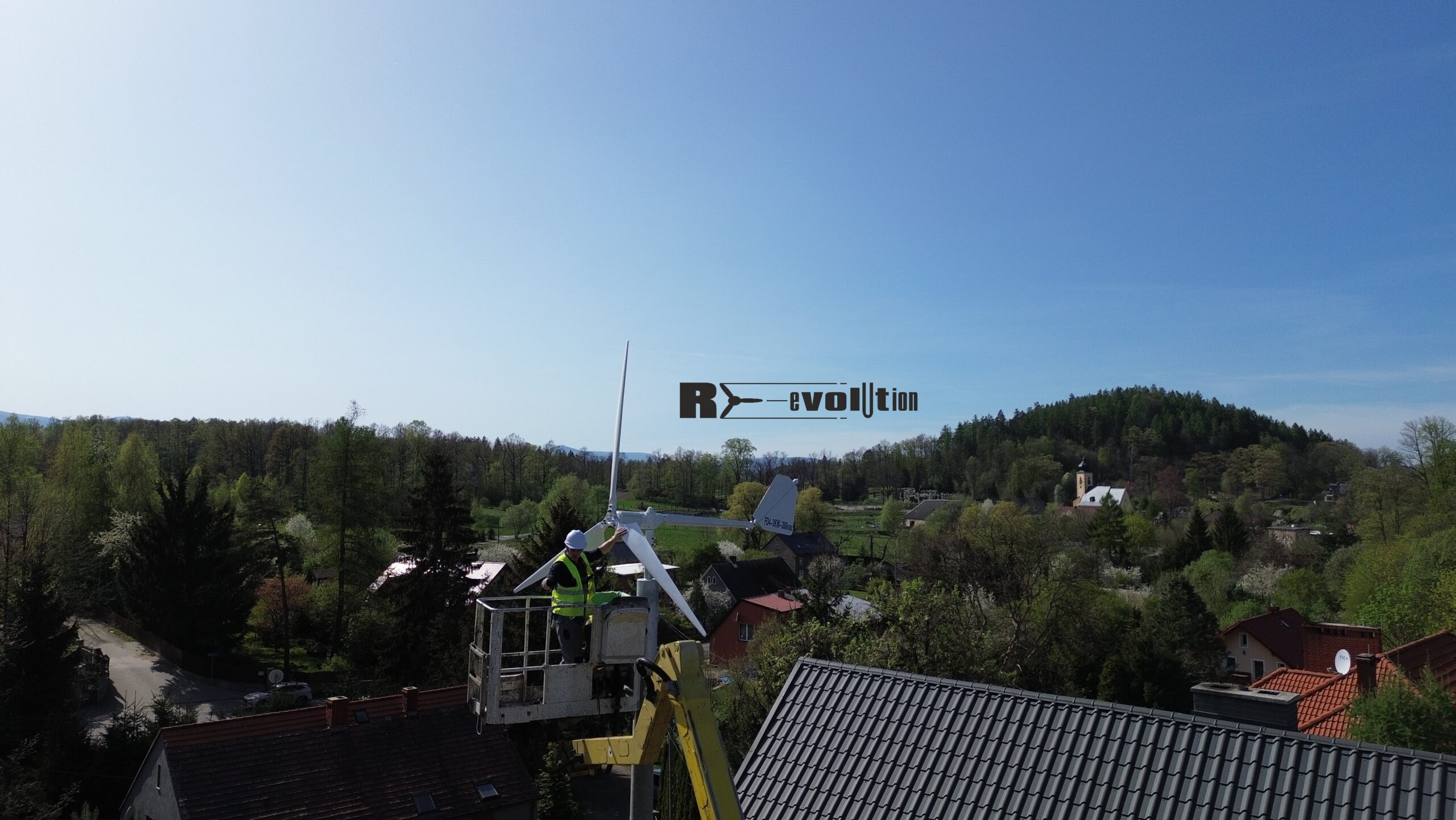
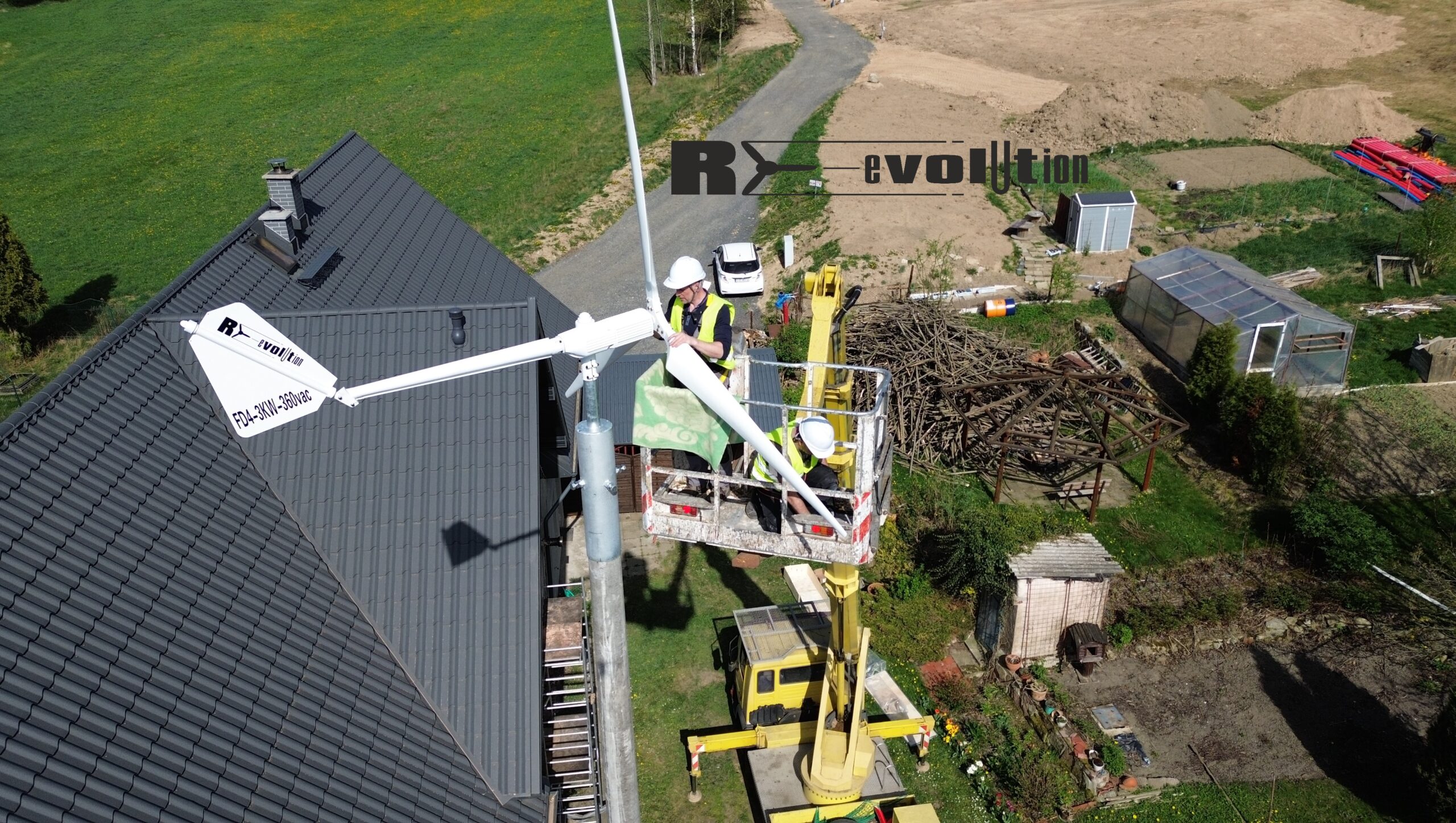
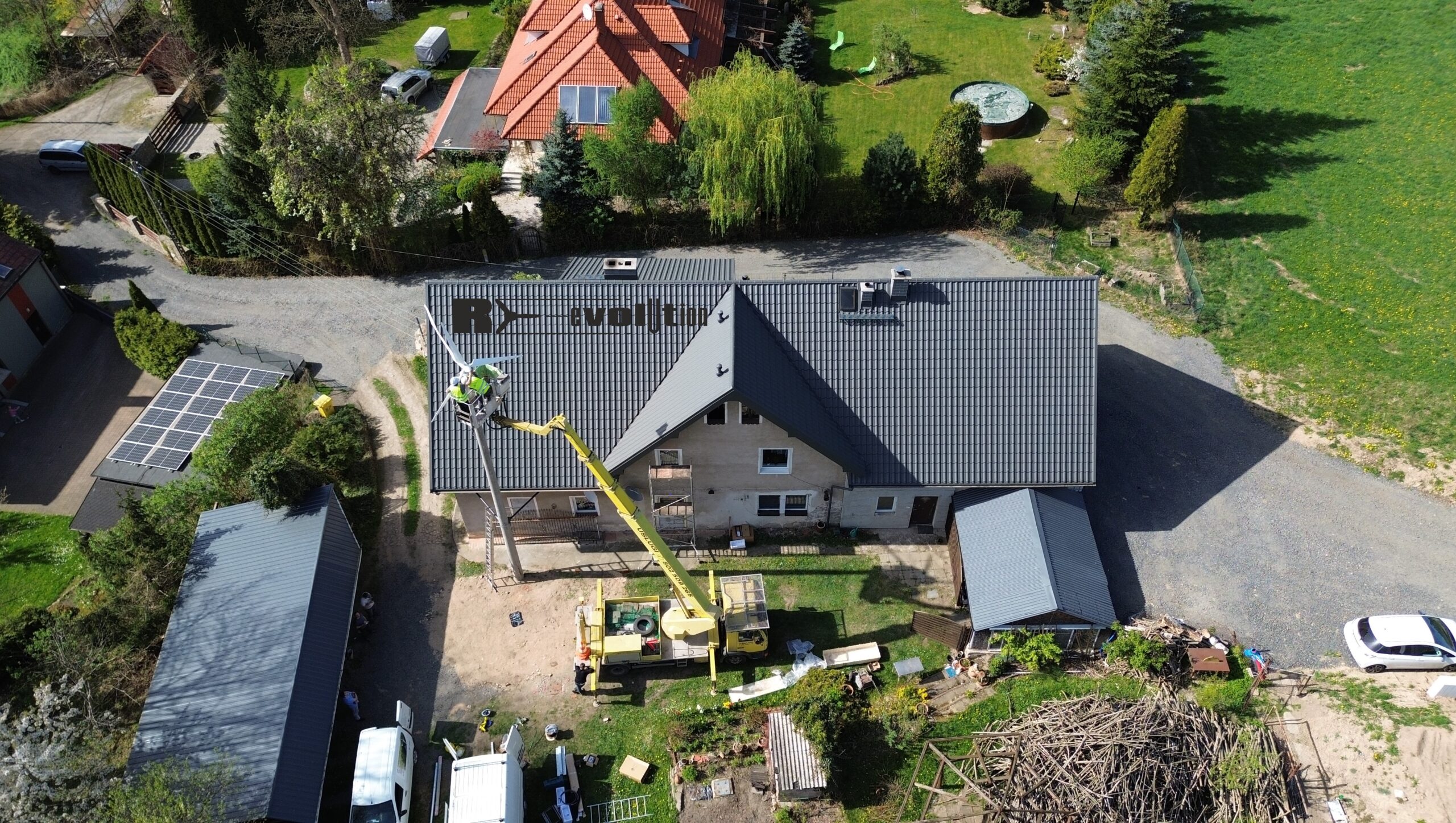
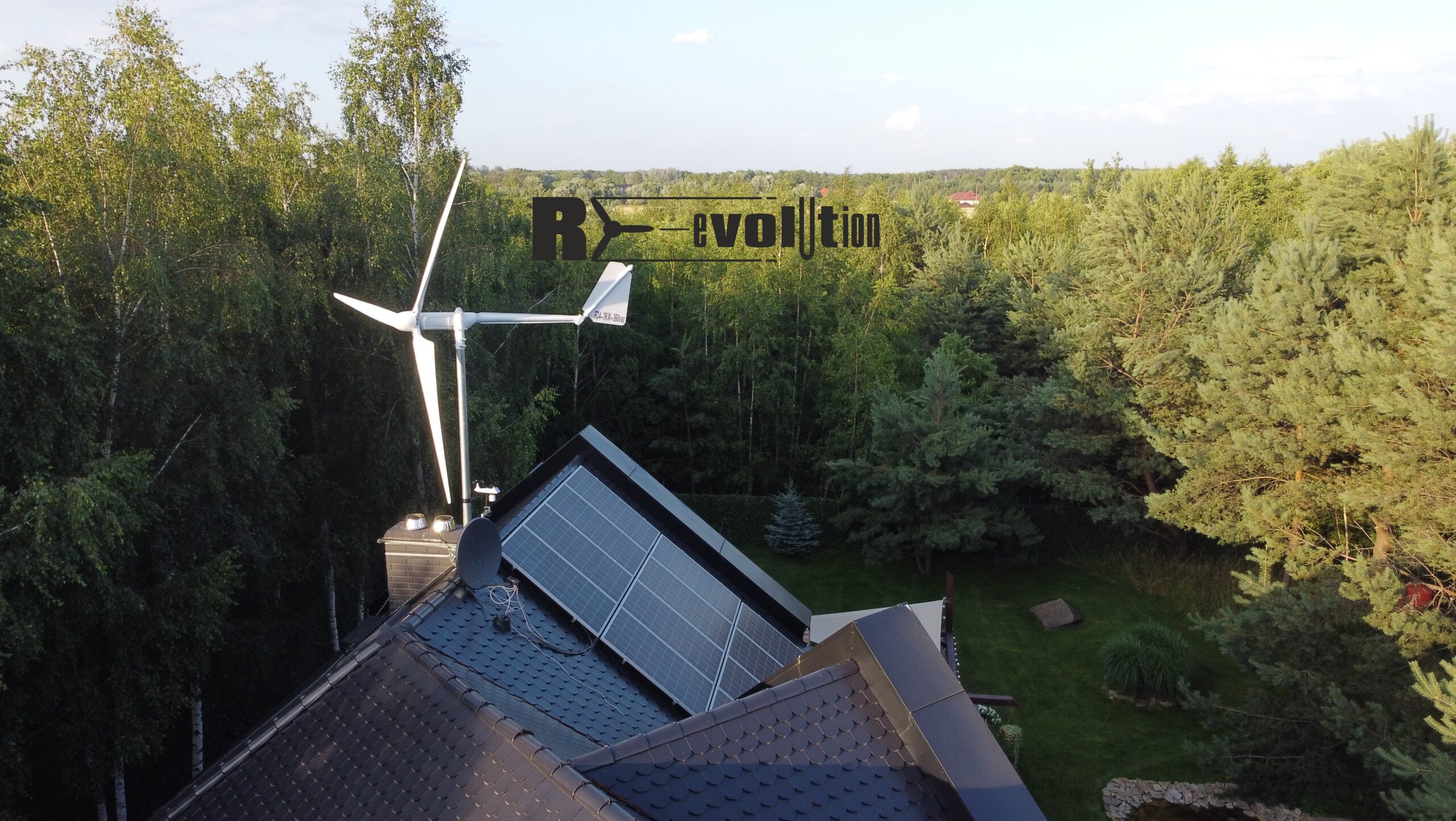
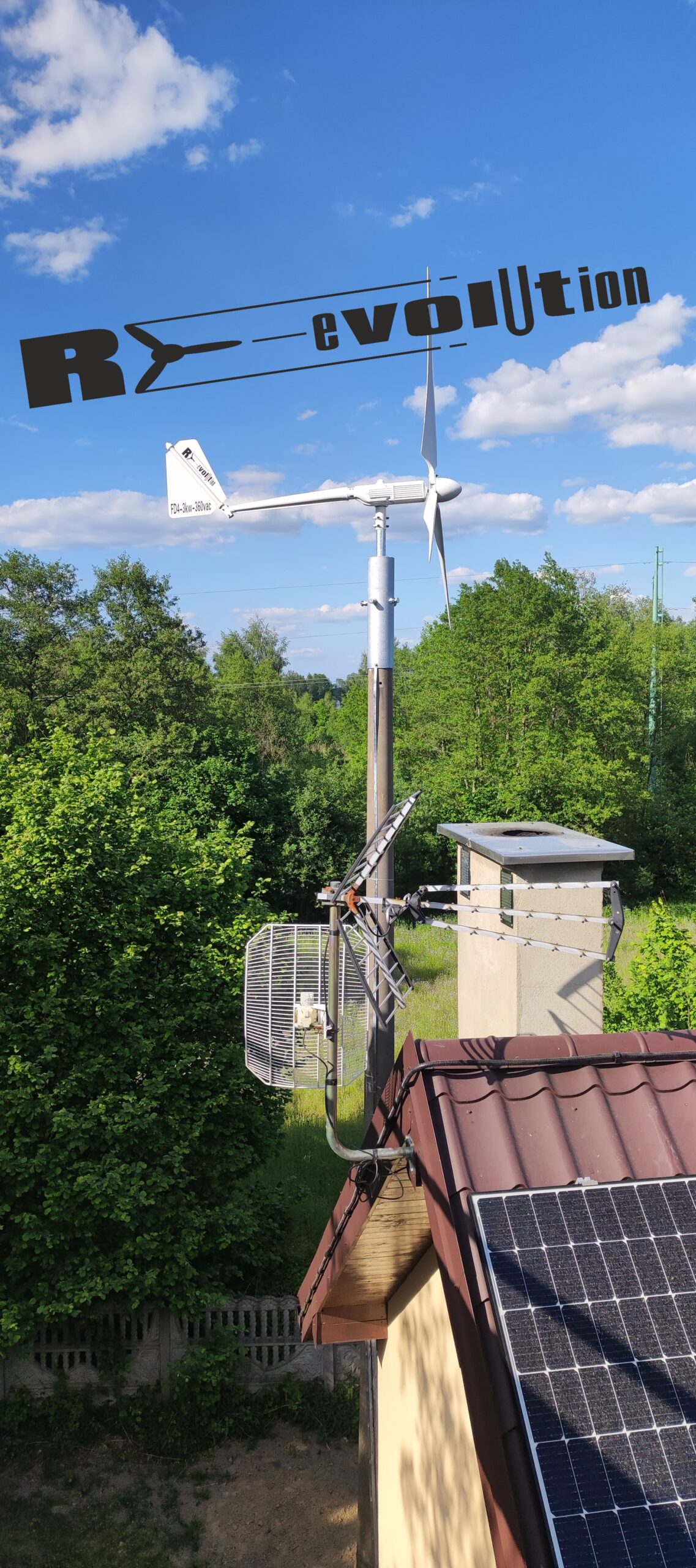
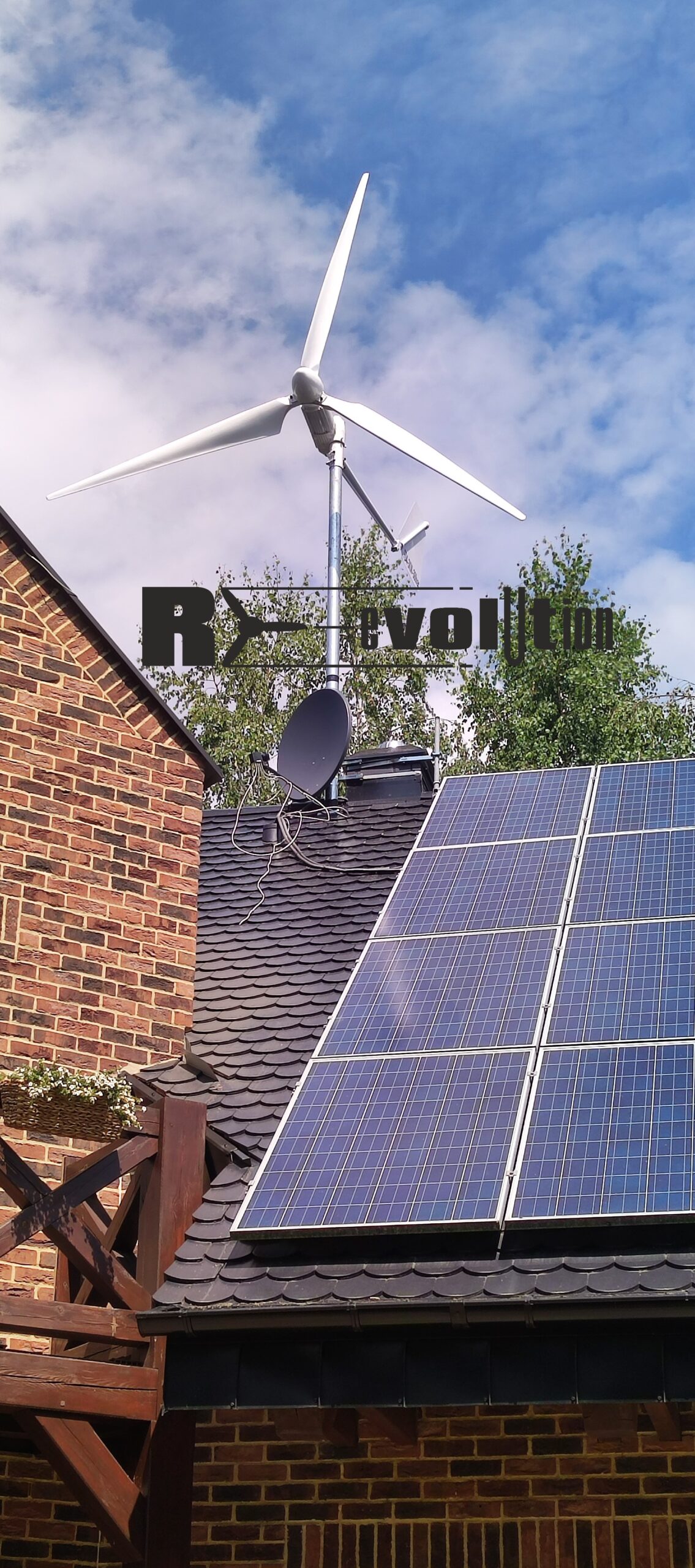
Although small-scale residential wind systems are still not widely used, they have been utilized around the world for a long time. As early as the Middle Ages, wind-powered mills were used to grind grain. Today, our company aims to bring this method of energy generation back into use as a simple and cost-effective way to produce electricity for households.
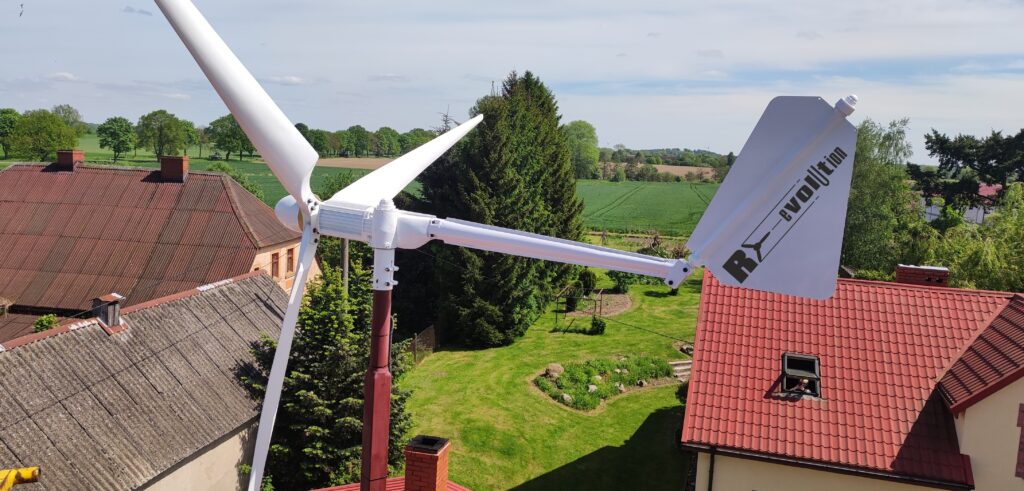
Residential wind systems can be divided into two main types: horizontal-axis turbines and vertical-axis turbines. The greatest advantage of horizontal turbines is their high efficiency, reaching around 44%, which is more than 2.5 times higher than that of vertical turbines (approx. 16%). Vertical turbines, on the other hand, are characterized by quieter operation, which makes them more attractive in built-up areas. An additional advantage is their ability to operate in changing wind directions.
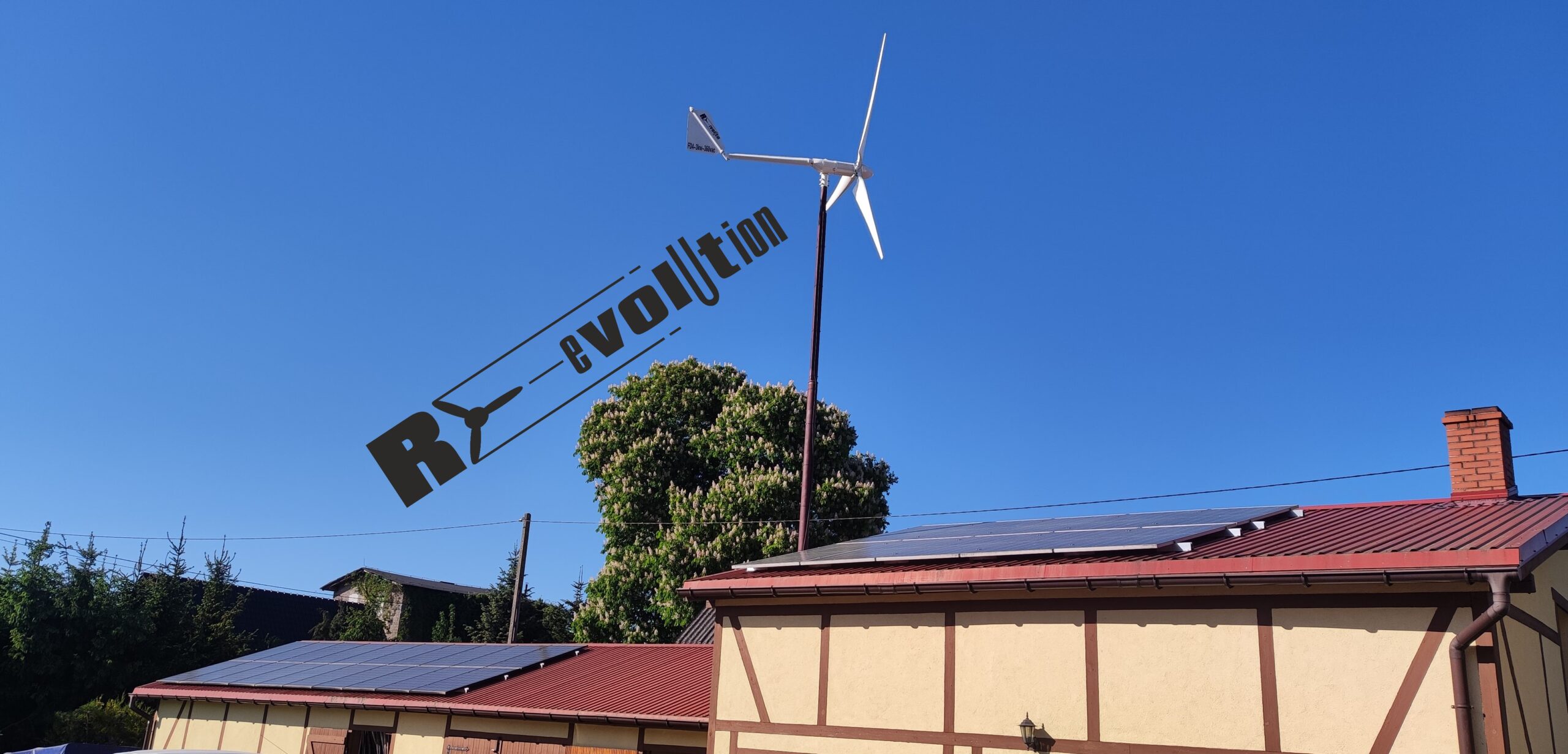
For comparison, photovoltaic systems achieve efficiency levels of around 21–22%. In theory, this means that a 3 kW wind turbine could generate up to twice as much energy as a photovoltaic system with the same capacity. In practice, however, much depends on local conditions, especially wind availability. Such a 2:1 energy production ratio would only be possible if wind speeds of around 12 m/s occurred as frequently as peak sunlight at midday—which is relatively unlikely.
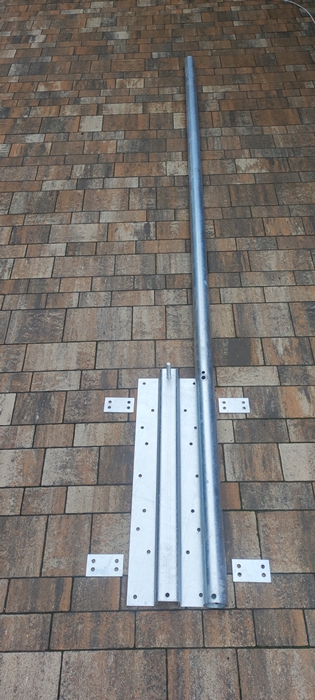
In addition to location, the installation method is also crucial. One of the most common sources of noise is an improperly selected or insufficiently rigid mast. In such cases, the turbine may enter resonance, resulting in characteristic rattling of the blades. Long-term vibrations lead to bearing wear and, in extreme cases, even damage. Another important element is the rotor blades, which can produce an audible “whooshing” sound in strong winds. However, this should not be considered bothersome, as it is usually masked by natural wind noise.
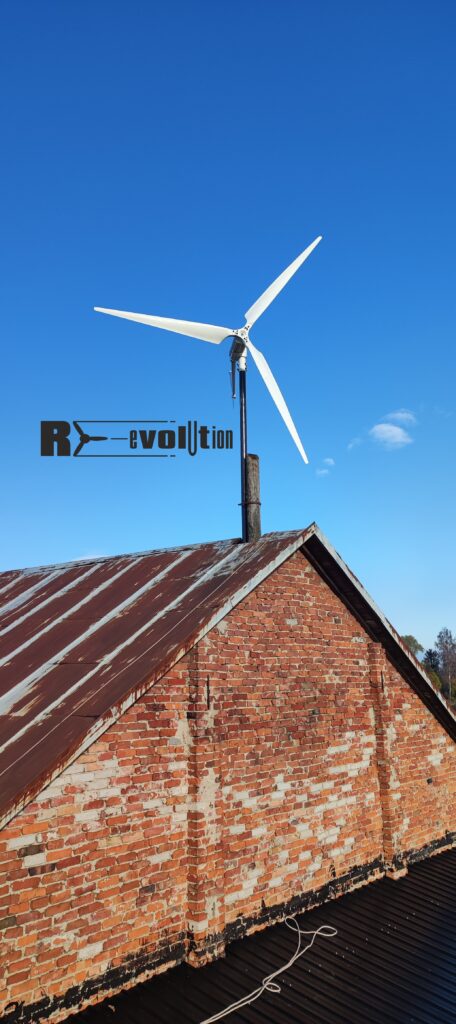
Formal requirements for installing a residential wind system depend mainly on the height of the mast and the installation location. If the mast does not exceed 3 meters above the highest point of the building (e.g., a chimney), the installation is treated as part of the building and does not require notification or permits. If the mast is installed anywhere on the property (e.g., up to 12 meters in height), it must be located at least 12 meters from the property boundary. In certain cases, only a construction notification is required. Detailed regulations are defined in building law effective from January 2026.
The main advantage of horizontal-axis wind turbines over photovoltaic systems is their higher efficiency and more consistent energy production. It is estimated that up to 70% of energy is generated between October and March—when energy demand is at its highest. Additionally, turbines can operate 24 hours a day. Their mechanical lifespan typically ranges from 15 to 20 years—similar to photovoltaic panels—while maintaining stable performance throughout their entire service life.
Our offer includes wind turbines with capacities of 2, 3, 4, 5, 7.5, and 10 kW. Models in the 2–4 kW range can be mounted directly on buildings, for example on a wall. Larger units (5–10 kW) are designed for installation on dedicated masts. We provide complete systems including the turbine with mast, controller, braking system, inverters adapted for wind turbines, and energy storage. The system can be further expanded with a photovoltaic installation and a generator, creating a fully independent off-grid environment. In such a model, the user becomes independent from energy suppliers and eliminates electricity bills.
Our company operates its own laboratory, enabling optimal integration of all system components—the turbine, controller, and inverter. A key element is the proper matching of the turbine’s power curve, which is programmed into the inverter. This ensures the turbine operates within its optimal speed range and achieves maximum possible efficiency. Using a standard photovoltaic inverter, which is designed to maximize energy extraction from solar panels, can result in the turbine being slowed down too early, reducing energy output by up to approximately 25%.