
Energy storage systems
Driven by the wind, powered by the sun
Energy storage is an important part of energy independence, but it still represents a significant financial expense, and its economic profitability is often difficult to calculate. The simplest type of energy storage that can be built for home is a battery storage system. Today, many different types of batteries are available on the market, and their efficiency, number of charge cycles, operating speed, and prices vary widely. Therefore, before making an investment, it is worth considering how much you are willing to invest in such a storage system, what its purpose will be, and consequently how long you expect it to serve you.
Currently, the battery market offers lead-acid batteries, their more advanced versions such as AGM and gel batteries, as well as various types of lithium-ion storage systems. All these battery types have their own characteristics, and they will perform their role well if their properties are properly matched to the tasks they are expected to perform. Some energy storage systems will be suitable for holiday homes, and others for year-round residential houses. Some systems are designed to protect the household against frequent power outages, while others are intended to store energy produced by photovoltaic panels during the day and to use it at night.
The capacity of the energy storage system also depends on whether the house is equipped with a Home Energy Management System (HEMS) or only a standard inverter, whose role is simply to convert solar energy into grid-compatible electricity.
What benefits does owning an energy storage system provide?
- Increase in self-consumption, meaning the ability to use electricity on a 1:1 basis. Today, prosumers who feed electricity into the grid can recover about 80% of the energy they supplied. Those who are settled under the net-billing system sell their electricity at wholesale market prices, while they purchase electricity at retail prices. The difference between these prices can reach as much as 40% *.
- Purchasing electricity during the night tariff and consuming it during the day tariff. The difference between these tariffs can reach up to 40%, so it is worth buying electricity when it is cheap and using it when it is expensive. In this model, it is not even necessary to own photovoltaic panels or a wind power installation for an energy storage system to be economically beneficial.
- Selling and buying electricity according to economic profitability. From January 1, 2024, electricity prices in Poland are being liberalized. Prices will depend primarily on electricity producers, and wholesale prices — for example in the net-billing system — will be settled on an hourly basis. There may be situations where, for example, during a weekend the price of electricity drops to 0.00 PLN, while by Monday it may exceed 1.50 PLN. Already today Poland experiences problems with excess electricity during sunny weekends, when self-consumption is low, while in the evening there is often a shortage of energy, requiring quick imports at much higher prices.
- Ensuring power supply during electricity outages. This is one of the primary roles of an energy storage system, especially in areas where power outages occur frequently, or in households where a person depends on life-supporting medical equipment that requires electricity. It is also important in farms where animals rely on electrically powered systems for their daily functioning. Additionally, when a house is equipped with a Home Energy Management System (HEMS), the energy storage system can keep it operating during an outage. In such a situation, the household may continue using electricity generated by the wind turbine or photovoltaic panels, while the stored battery energy is preserved for later use.
- If we own an electric car but drive it to work, it would be ideal to charge it using solar energy. However, if we leave home in the morning and return in the afternoon, we usually do not have that opportunity. A solution may be to use an energy storage system, which can be charged during the day and then used at night to charge the car.
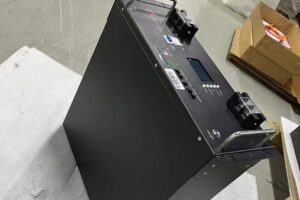

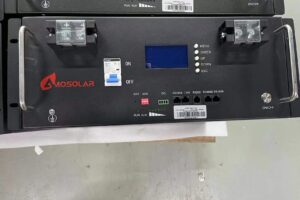
* billing conditions in Poland
There will be more and more reasons to invest in energy storage, especially as electricity prices continue to rise — which is very likely, particularly in a country whose energy sector is largely based on coal. This type of energy system does not work well with the modern reality of renewable energy sources (RES). Coal power plants need several hours to increase or decrease their output, while solar generation can drop very quickly — for example when the sun sets or a storm arrives. For this reason, flexibility in the energy system is crucial, and this flexibility can be achieved primarily through energy storage systems.
So the question remains — isn’t it worth it?
In our offer we provide various types of energy storage systems, from more affordable lead-acid battery solutions to high-performance, long-lasting lithium-based systems. Everything depends on what we want to achieve, the level of investment we are willing to make, and the expected results.
Contact:
-
Re-evolution Sp. z o.o.
ul. Św. Michała 100/6
61-005 Poznań - +45 50 10 59 72
- contact@re-evolution.pl